
Why Does Marketing Feel More Complicated Than Ever?
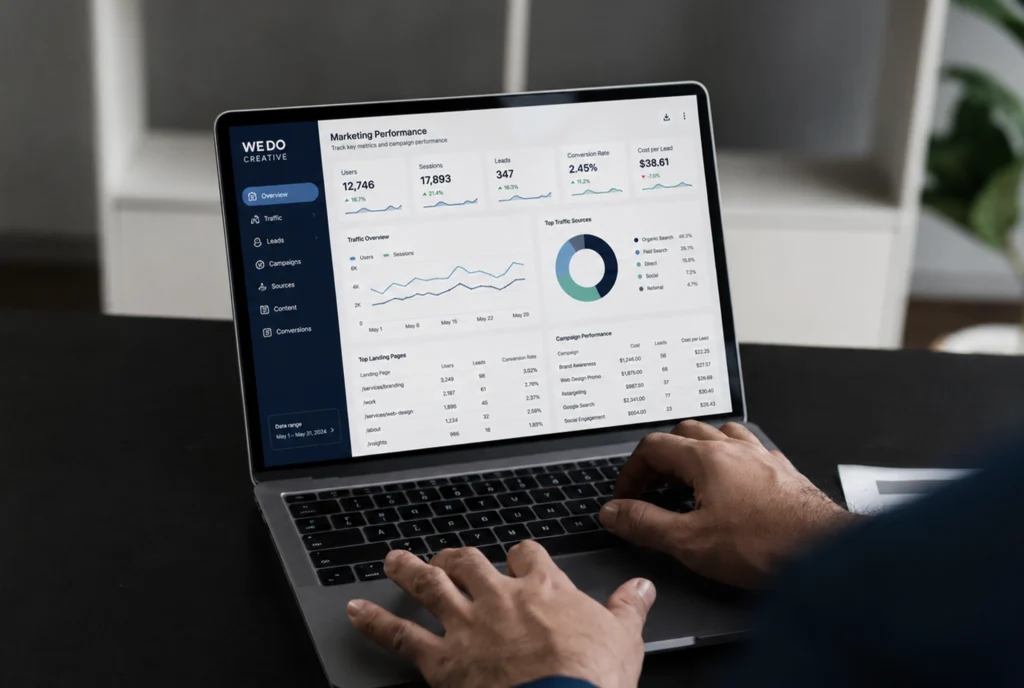
If you’ve found yourself asking that question recently, you’re certainly not alone. Over the past year, we’ve had conversations with businesses of all shapes and sizes. Some are well-established manufacturers, others are growing engineering companies or family-run businesses looking ahead to their next phase of growth. Although every business is different, the conversations often begin in a remarkably similar way. It’s an understandable feeling. Not so long ago, marketing was relatively straightforward. You had a website, attended a few exhibitions, sent the occasional email campaign and relied on recommendations. Today, the landscape looks very different. There are countless digital channels to consider, new AI tools appearing almost weekly and more data available than ever before. On paper, that’s a positive thing. In reality, it can leave businesses wondering where to focus their time and energy. One of the biggest misconceptions is that growth comes from doing more More social media posts. More advertising. More emails. More technology. In our experience, that’s rarely the answer. The businesses that continue to grow are not necessarily the ones doing the most. More often, they’re the ones that understand how all the different parts of their business fit together. Their website supports their sales team. Their marketing reflects the conversations they’re having with customers. Their CRM isn’t just somewhere to store contact details, but a tool that helps them make better decisions. Their content answers real questions because it’s written with their audience in mind, not search engines alone. That’s why we believe good marketing starts by stepping back rather than rushing forward Before investing in another campaign or exploring the latest technology, it’s worth asking whether everything you already have is working together in the way it should. Are visitors finding the information they need? Is your enquiry process straightforward? Are you measuring the things that genuinely matter, or simply the things that are easiest to measure? Those questions often lead to far more valuable conversations than deciding which platform to post on next. Artificial Intelligence is a good example. It’s impossible to ignore the impact AI is having on business, and rightly so. It has the potential to save time, improve efficiency and remove many of the repetitive tasks that take up valuable hours each week. Like any tool, though, its value depends on how it’s used. We’ve found the greatest benefits don’t come from replacing people, but from giving people more time to focus on the work that really matters. Thinking creatively. Solving problems. Building relationships. Understanding customers. The same principle applies to websites A website doesn’t need to be the most visually impressive in your industry to be successful. It needs to answer questions, build confidence and make it easy for someone to take the next step. Sometimes the smallest improvements can have the biggest impact, whether that’s simplifying a contact form, clarifying a service or making it easier for visitors to find the information they’re looking for. We’ve learnt that sustainable growth is rarely the result of one breakthrough moment. It’s usually built through small improvements made consistently over time. A clearer message. A better customer journey. More meaningful content. A stronger understanding of your data. A sales process that supports your marketing instead of working separately from it. Individually, those changes may not feel significant. Together, they create momentum. That’s the thinking behind The Growth Academy Over the coming months, we’ll be sharing the conversations we’re having, the ideas we’re exploring and the practical changes we’re seeing make a genuine difference for the businesses we work with. Some articles will look at marketing strategy, others will explore AI, branding, websites or customer experience. Whatever the subject, our aim will remain the same: to share ideas that are thoughtful, practical and genuinely useful. We don’t expect every business to face the same challenges, and we certainly don’t believe there’s a single formula for growth. Every organisation has different goals, different customers and different priorities. What we do believe is that asking better questions almost always leads to better decisions, and that’s something worth making time for. A Final Thought Business has never stood still, and neither has marketing. There will always be another platform, another trend or another technology promising to change everything overnight. Our advice is not to chase every new idea. Instead, understand your customers, build strong foundations and keep looking for opportunities to improve, one step at a time. If these articles encourage you to pause, ask a different question or look at your business from a fresh perspective, then The Growth Academy will be doing exactly what it was created to do. Follow us on Socials for latest updates and growth ideas along with sign ups to our newsletter.
Enhance Your Digital Strategy on a Budget

A solid digital strategy is crucial for any small business, but where do you begin if you’re working with limited resources? Even without a professional team, there are numerous ways to boost your online presence without draining your budget or valuable time. With free tools, online courses, and a bit of technical know-how, you can start building an effective digital strategy to engage with current and potential customers. Whether your goal is to raise brand awareness or drive sales, this guide will help you set a clear path to achieving your objectives. Exploring Key Digital Channels Website Your website serves as your digital storefront, providing information on new products, special offers, and insights into your business. A well-maintained and relevant website can attract new customers and reinforce your brand among existing ones. Social Media Platforms like Facebook and LinkedIn are invaluable for small businesses. Share your latest offers, company updates, and insightful content to engage with your audience and expand your reach. Paid Advertising Pay-per-click (PPC) advertising is a cost-effective way to gain quick results. You can utilise platforms like Facebook Ads or search engines such as Google and Bing to reach your target audience. Search Engine Optimisation (SEO) SEO involves optimising your website and content to rank higher in search engine results. Factors like relevancy, speed, and authority influence your ranking. A well-optimised site is more likely to appear at the top of search results, driving organic traffic to your business. Email Marketing Email marketing allows direct communication with your customers, keeping them informed about your latest offers and product launches. Various online platforms offer user-friendly templates to create professional emails. Online Review Platforms Positive reviews on platforms like Facebook, Google, and Trustpilot build trust and showcase your excellent customer service. Share these testimonials to enhance your brand’s reputation. Ready to Elevate Your Digital Strategy? Top Tips for Success: Do Your Research Identify your target audience. Ensure your messaging is clear and directed at the right people. Analyse your competition and learn from their successes. Plan, Plan, Plan Regularly update with fresh, relevant content. Keep up with trending topics. Use a content planner to schedule posts. Engage consistently with your audience. Test & Measure Implement A/B testing to see what works best. Use clear calls to action (CTAs) and track link performance. Analyse your results to refine your strategy. Expand Your Skillset Enhance your digital presence by incorporating video content. From interviews and article features to advertorials, there are numerous ways to integrate your brand into ongoing conversations. At We Do Creative, our PR experts are here to share top tips and strategies to elevate your brand. Don’t Miss Out on Essential Support We specialise in helping small businesses like yours reach their full potential. Our team of passionate creatives is dedicated to delivering outstanding results across web design, branding, digital marketing, strategy, and more. With a focus on sustainability and collaboration, we aim to exceed our clients’ growth expectations. Contact us today to learn why small businesses and freelancers across the UK choose us as their go-to creative agency. Let’s achieve your ambitions together!
What is Sustainability Marketing?
In a world increasingly aware of environmental and social issues, sustainability marketing offers a forward-thinking approach to promoting products and services. Companies worldwide are recognising that their success is intertwined with the planet’s health. As a result, they are adopting sustainable practices and integrating them into their marketing strategies. Sustainability marketing has become a vital tool for businesses to demonstrate their commitment to a sustainable future, stand out from competitors, and build trust with their audience. If you’re keen to learn about sustainability marketing, you’re in the right place! This blog post will explore everything from its definition to best practices. Let’s dive in! What is Sustainability Marketing in Business? Sustainability marketing involves promoting and selling products or services in a way that reflects a commitment to environmental, social, and economic sustainability. It’s about showing how a company’s offerings are responsibly designed and produced, considering the well-being of people and the planet. The main goal is to create value for both the company and society by addressing environmental and social challenges. This approach goes beyond traditional marketing by considering the long-term impacts of business practices. For instance, a clothing company might emphasise that its products are made from organic or recycled materials, highlight fair trade partnerships, and use energy-efficient manufacturing processes to reduce its carbon footprint. By educating consumers about these practices, the company can attract environmentally conscious customers who share their values. The Three Levels of Sustainability Marketing Sustainability marketing can be approached on three levels: Do Less Bad Focus on minimising negative impacts, such as reducing energy consumption, minimising waste, using eco-friendly materials, and complying with environmental regulations. Do More Good Aim to create positive environmental and societal outcomes, such as investing in renewable energy, supporting local communities, engaging in conservation efforts, and promoting fair trade. Do Different Challenge the status quo by adopting innovative approaches to drive systemic change. This includes developing sustainable alternatives, collaborating on industry-wide sustainability standards, embracing circular economy principles, and advocating for supportive policies. At We Do Creative – We Do Sustainability and here to support businesses that not only mitigate harm but also actively contribute to a sustainable future and transform industry norms. Discover how we support brands with their Sustainable content, and check out our blog on how to do Digital Sustainably!